 Machine à blocs de tigre

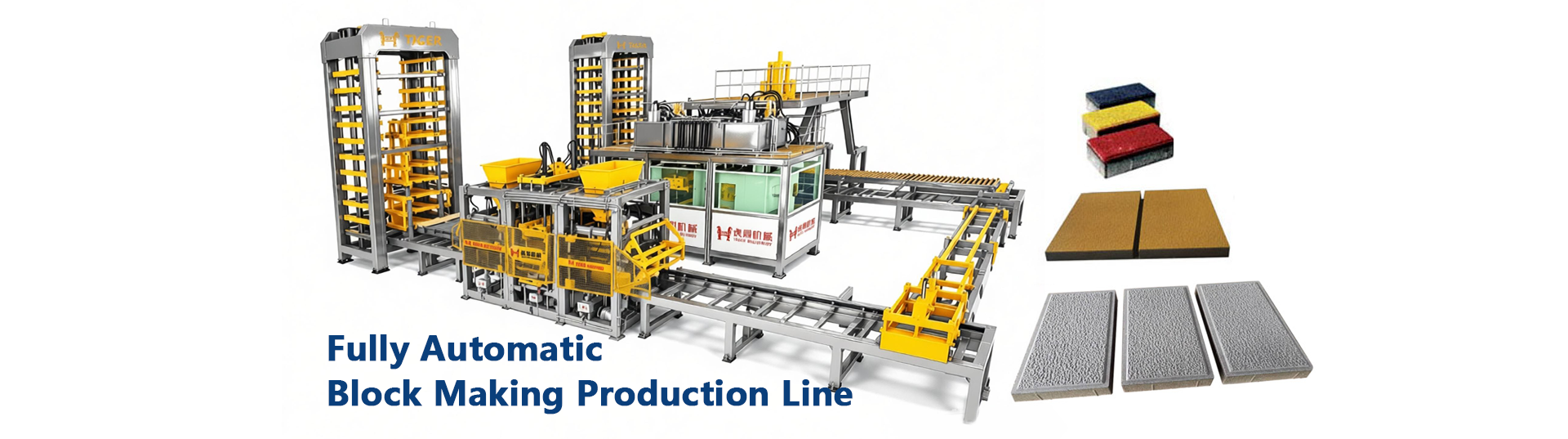
A fully automatic block machine is core equipment for modern construction material production. Its power consumption directly affects operational costs and production efficiency. Understanding its power usage helps manufacturers optimize energy use and budget accurately. Tigre, a leading brand, designs fully automatic block machines that balance high productivity with reasonable energy consumption, setting an industry benchmark.
Typical Power Consumption Range of Fully Automatic Block Machines
The power consumption of a fully automatic block machine varies by model, configuration and production scale. A standard single-line machine usually has a total installed power of 25–40 kW. This includes motors for mixing, vibration, hydraulic systems and material conveying.
For example, the Tiger QTJ4-15 model has a rated power of 25.3 kW. The larger QT5-15 model reaches 37.2 kW. Large-scale production lines may have a total power consumption of 200–400 kW, due to additional curing and stacking systems.
Key Factors Affecting Power Consumption
Several factors influence the power consumption of a fully automatic block machine. First is production capacity. Higher-output models need more powerful motors, which increases energy use.
Second is block type. Solid blocks or pavers require stronger vibration and pressure. They consume 15–20% more power than hollow blocks.
Third is automation features. Advanced Tiger models use variable frequency drives (VFDs). These adjust motor speed and reduce idle power waste by 20–30% compared to traditional machines.
Actual Operational Energy Consumption
In actual use, a fully automatic block machine consumes an average of 25–40 kWh per 1,000 blocks. A standard Tiger model uses about 200–300 kWh per 8-hour shift.
This depends on raw materials and production settings. Regular maintenance can further improve energy efficiency by 5–10%. Simple steps like lubricating motors and calibrating hydraulic systems work well.
Conclusion
The power consumption of a fully automatic block machine varies widely based on model and production needs. Tiger fully automatic block machines stand out for their efficient power design. They meet high production demands while controlling energy costs. When selecting a machine, manufacturers should evaluate both initial investment and long-term power consumption for optimal economic benefits.